
The heavy, story driven RPG that might orbit in your game rotation but falls back to earth after one playthrough.

My playthrough started in the character builder by choosing my background (gambler) and 2 core skills (explosives and Speech) plus your trait. For my playthrough I chose the Lucky trait which provides a valuable +5% critical hit chance in combat and unlocks unique, often serendipitous, dialogue and environmental opportunities.
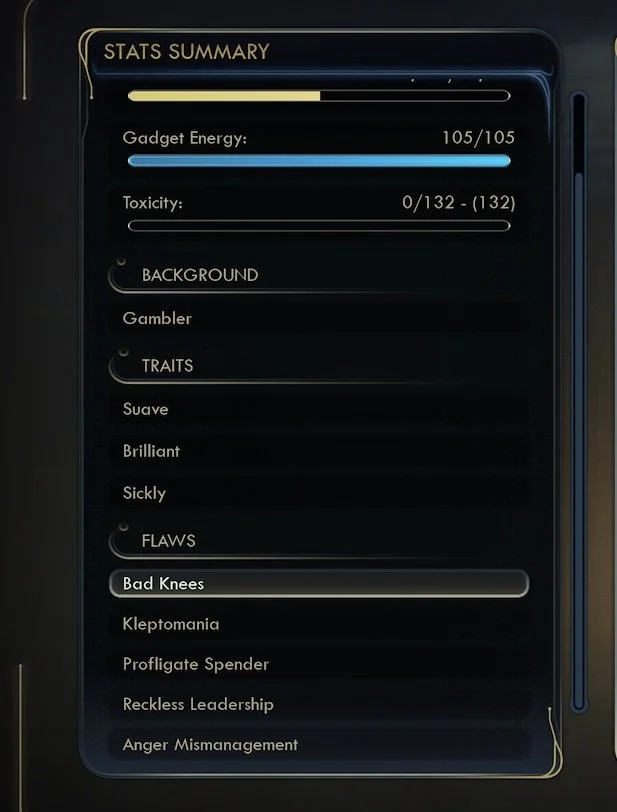
The character selection is also where I was introduced to the flaw system. A glorious innovation introduced by Obsidian Entertainment in the first instalment of the series and perfected in Outer Worlds 2. In essence, you are tempted with an apparent bonus at the expense of some negative trait that requires you to deliberate on its worth.
For example, when selecting the lucky trait, I was prompted with the option to select another trait, at the cost of a flaw. I selected Brilliant (giving one additional skill specialisation and an additional two skill points) and was then forced to select one of three flaws. I chose Sickly which reduced my base health and toxicity crash threshold.
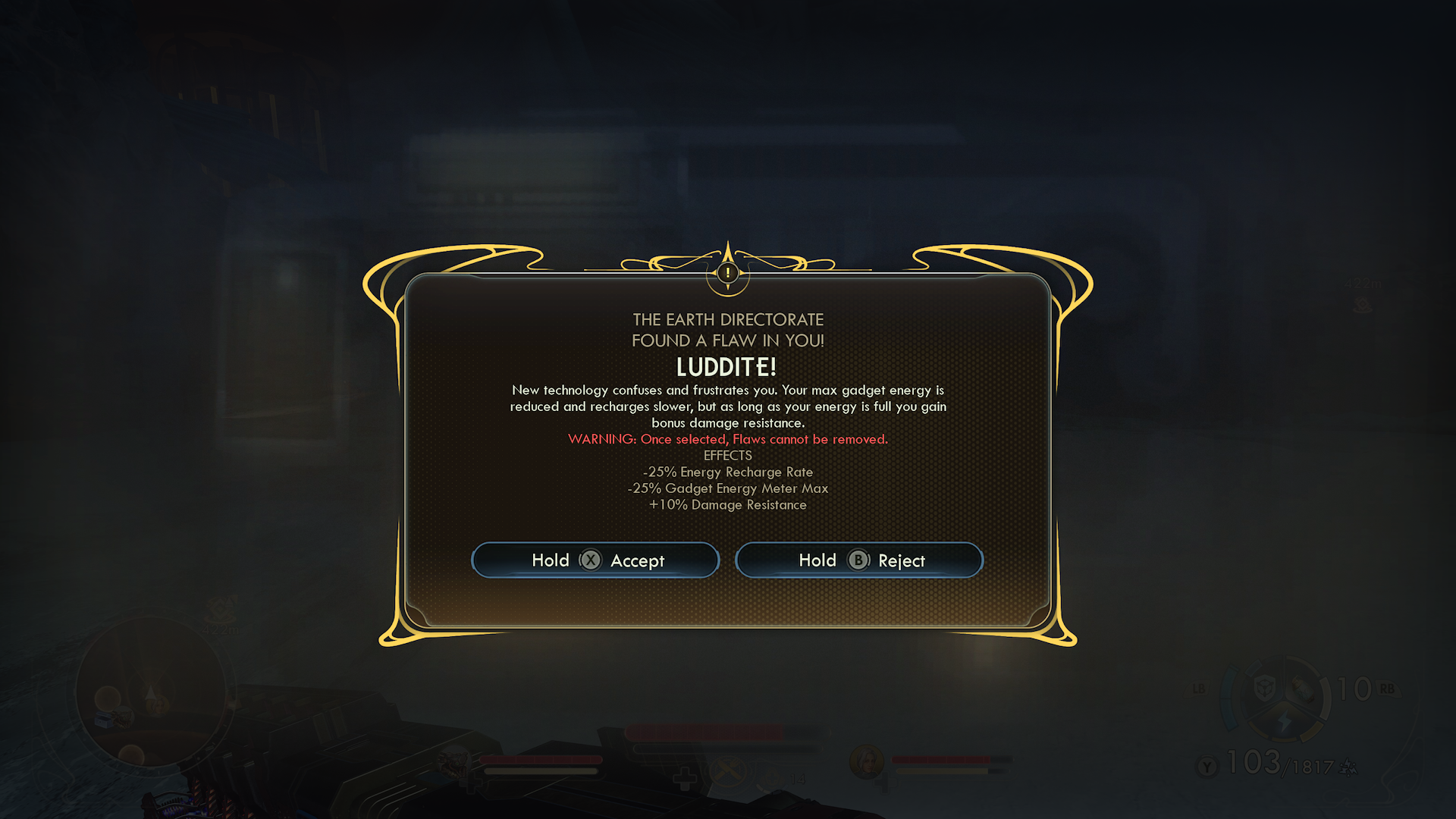
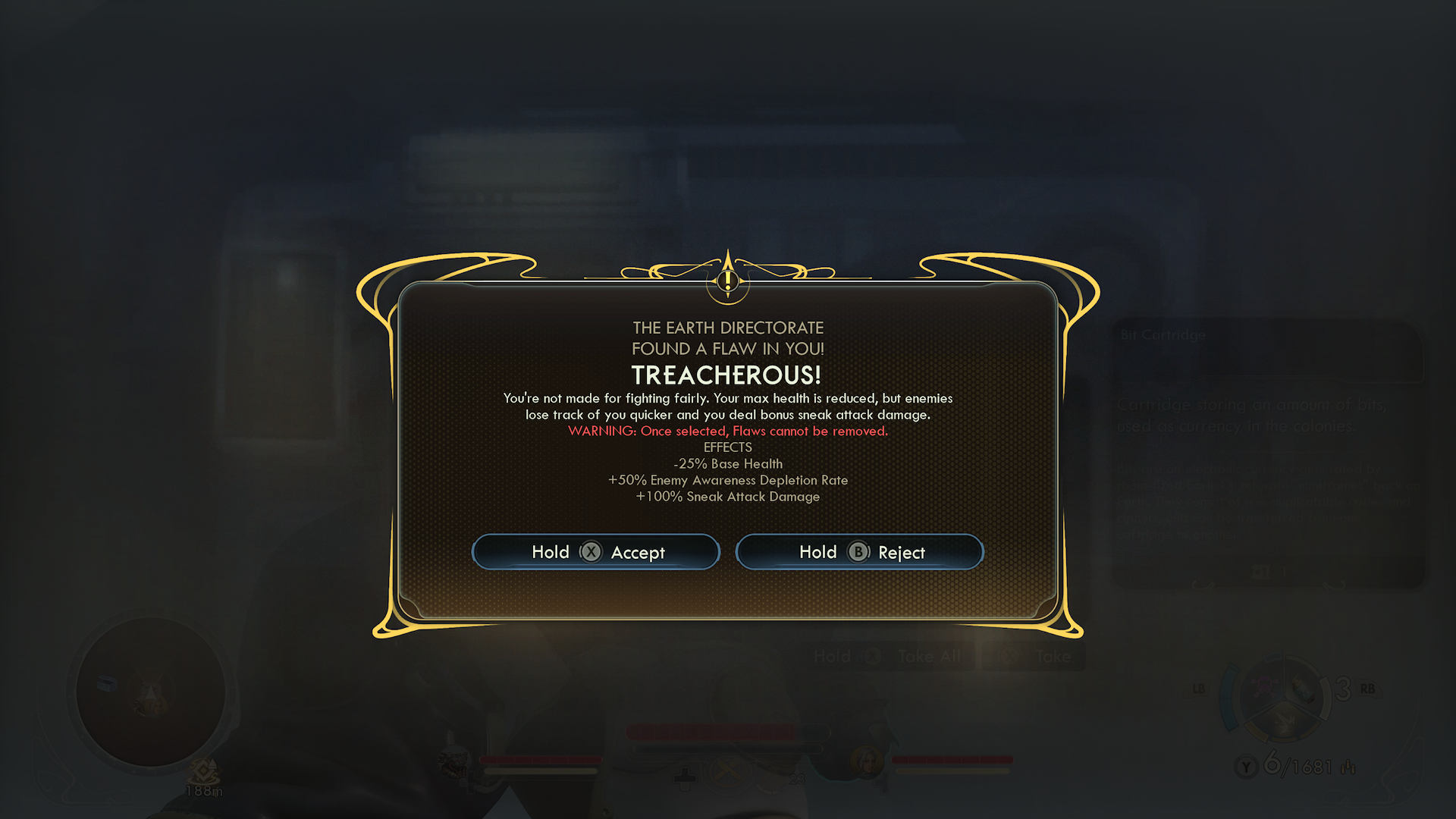
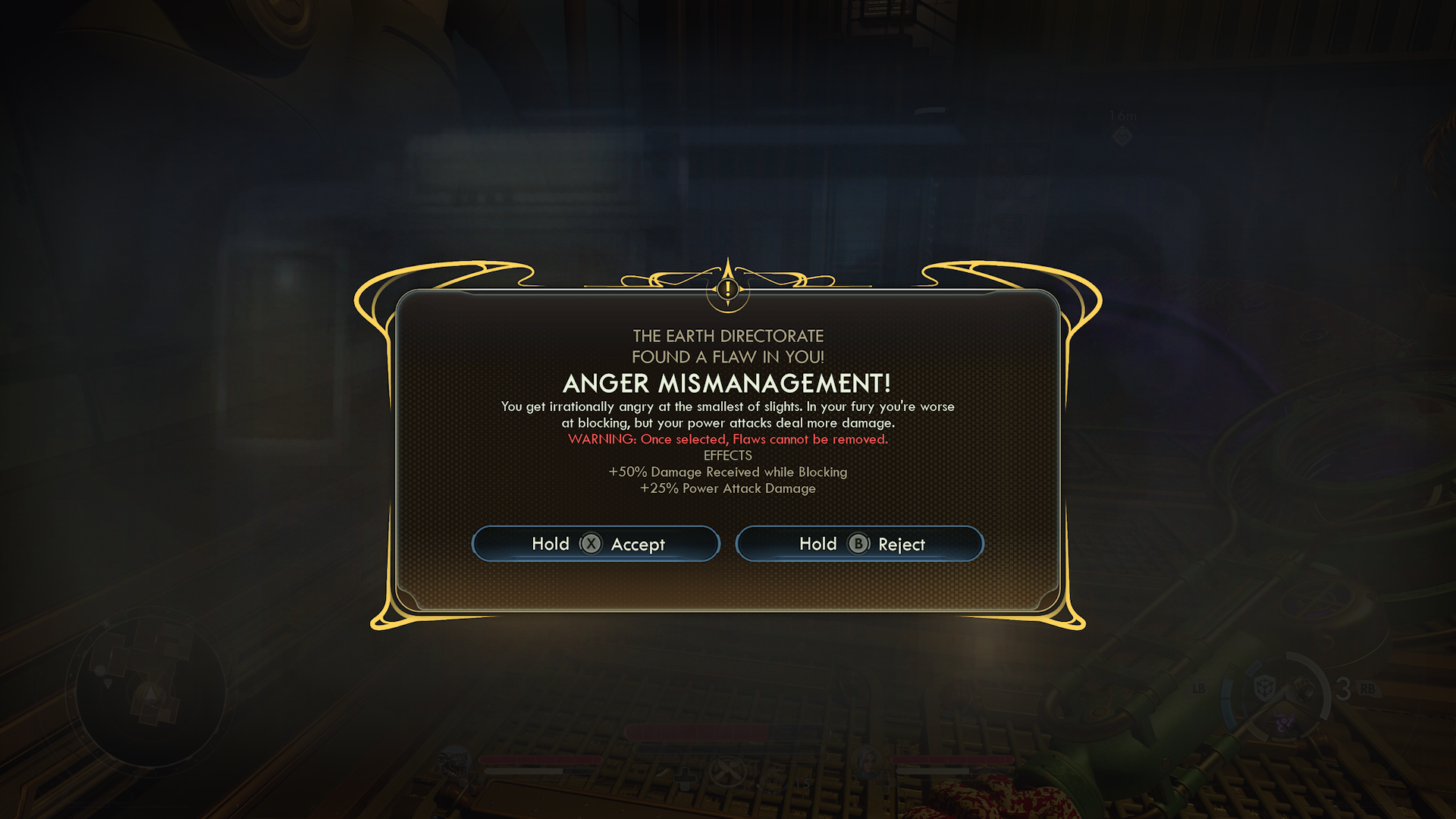
However, certain flaws are also introduced through gameplay mechanics. For example, players may acquire the Kleptomania flaw after stealing a specific number of items, or Compulsive Liar after choosing lie dialogue options repeatedly.
These choices alone will carry throughout the whole game; it can open doors for unique conversational options and expose story-altering decisions (even sacrificing a companion).
Playthrough
The game opens with a setup that feels classic to the genre yet remains engaging. You step into the role of a Commander sent to infiltrate the Protectorate controlled Arcadia System and investigate how skip drives are creating the dangerous rift anomalies. This mission is a perfect introduction into the games combat mechanics, companionship and mission design.
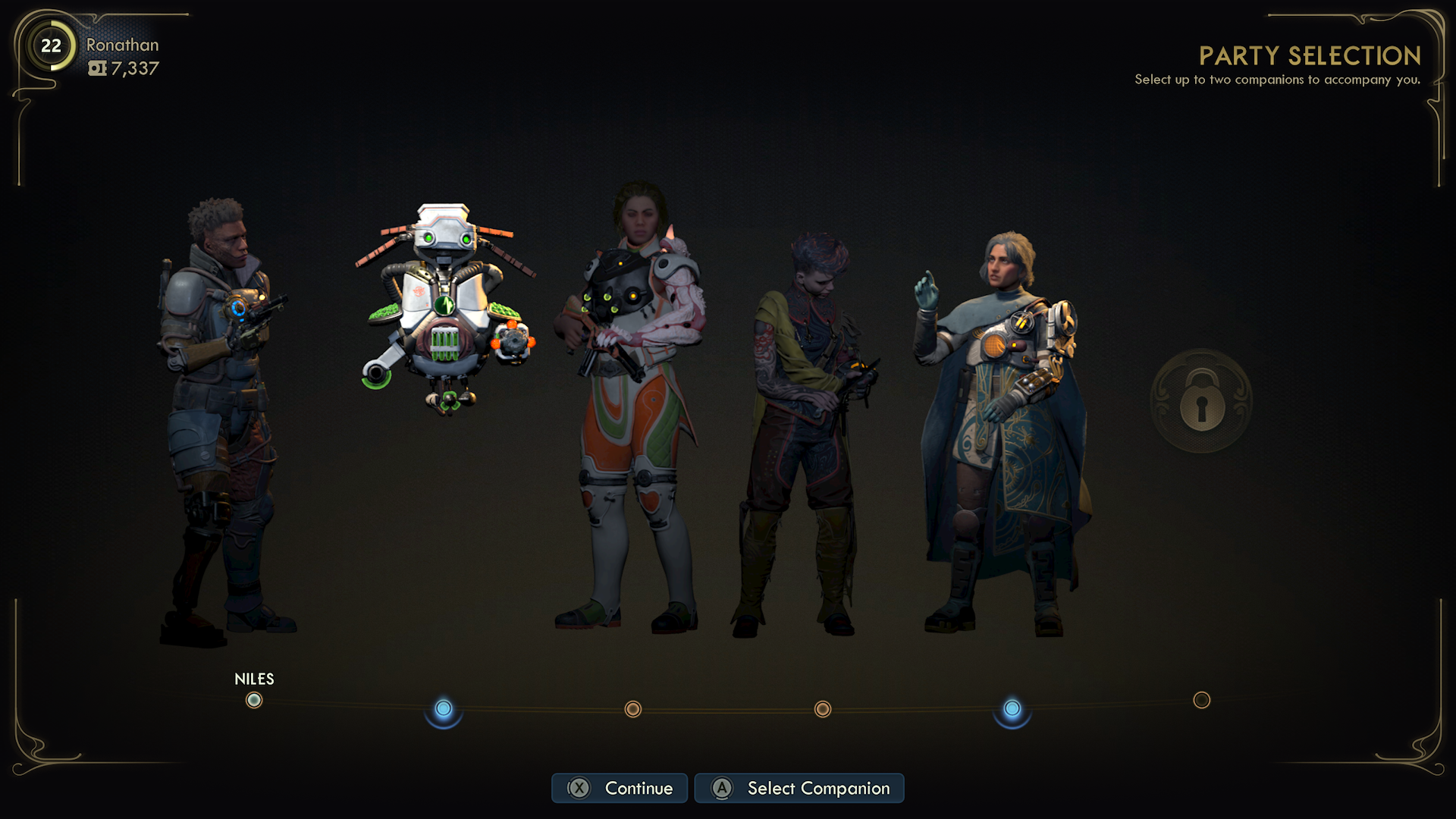
The stories pace can feel confusing at times with many side missions being trickled in as you traverse the multiple planets the game has to offer. Keeping tabs on what each companions story is about can be frustrating and lead to making some quirkier decisions to “see what happens” as you lose a sense of connection to what’s going on. This would be my first draw back to the game as after playing for a few hours and then stepping away for a week, I found it difficult to recall the story and follow what was happening. What is handy is the game has a large community who have created several guides online so It’s not hard to lookup the best option if that’s your preferred way to play.
For testing the game, we trialled two separate playthroughs, one which focused on stealth and speech and one which focused on brute combat as the main cause of demolition. The gun play is extremely easy to pick up with a lacking sense of realism (e.g., no real recoil even when sniping). This is handy for those who don’t play too many shooters. However, melee focused builds appear more limited and require focus on specific gear and perks to make it more viable.
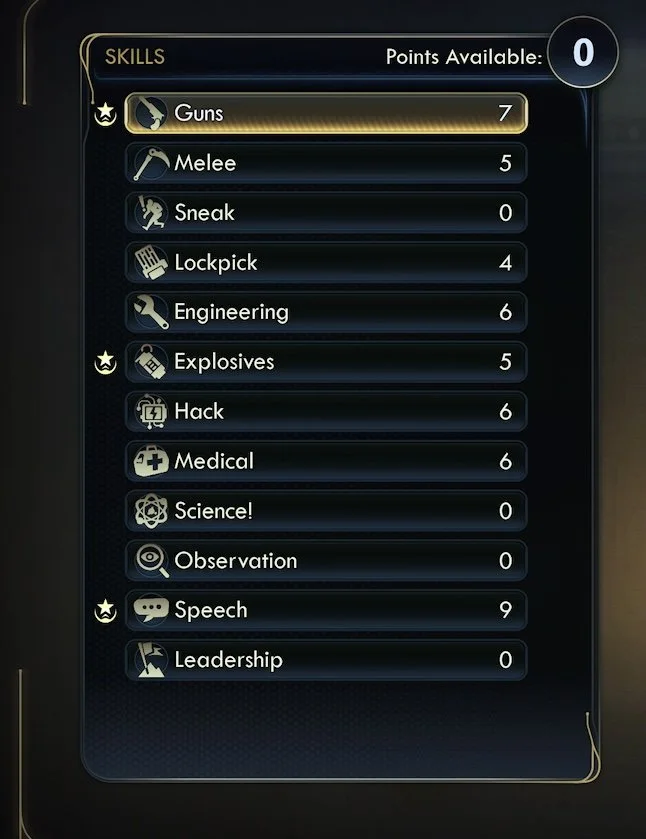
Conversely, the stealth build allowed us to fully leverage sneak-attack bonuses and bypass combat encounters altogether, resulting in a distinctly different gameplay experience.
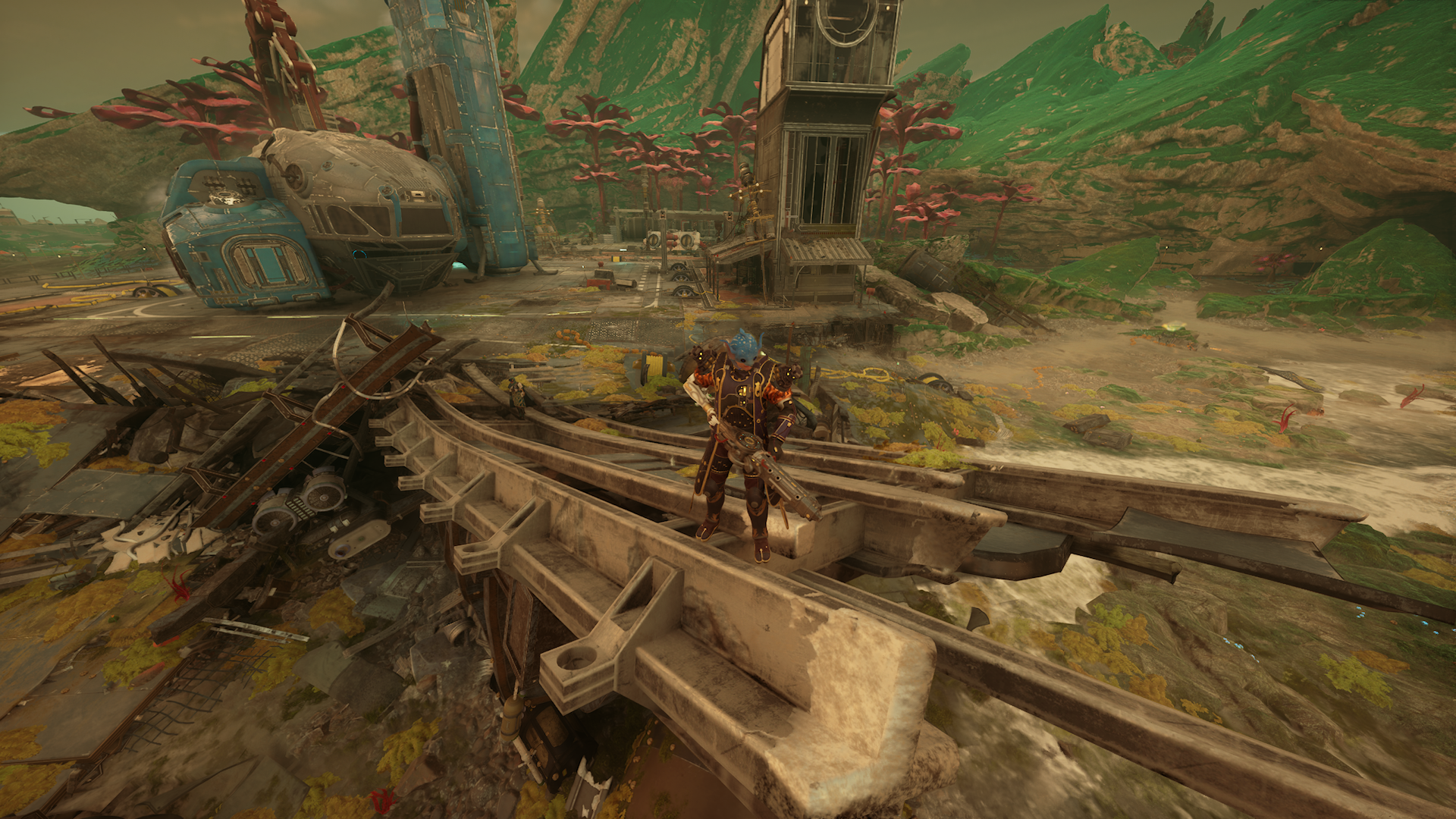
The games movement system is quite “floaty” and creates a feel of weightlessness a lot of the time. Perhaps an area for Obsidian to explore is the addition of say a jetpack or grappling hook to open the game to a freer sense of movement around the map. Further, the climbing and vaulting felt unfinished at times. You can find a suit of armour that has what I would describe as a booster pack, which when jumping gives you a slight 1–2-meter boost forward when jumping, but has been done better in other space games like Starfield. Look the for the Zyranium Automech Suit in your travels.
Gadgets
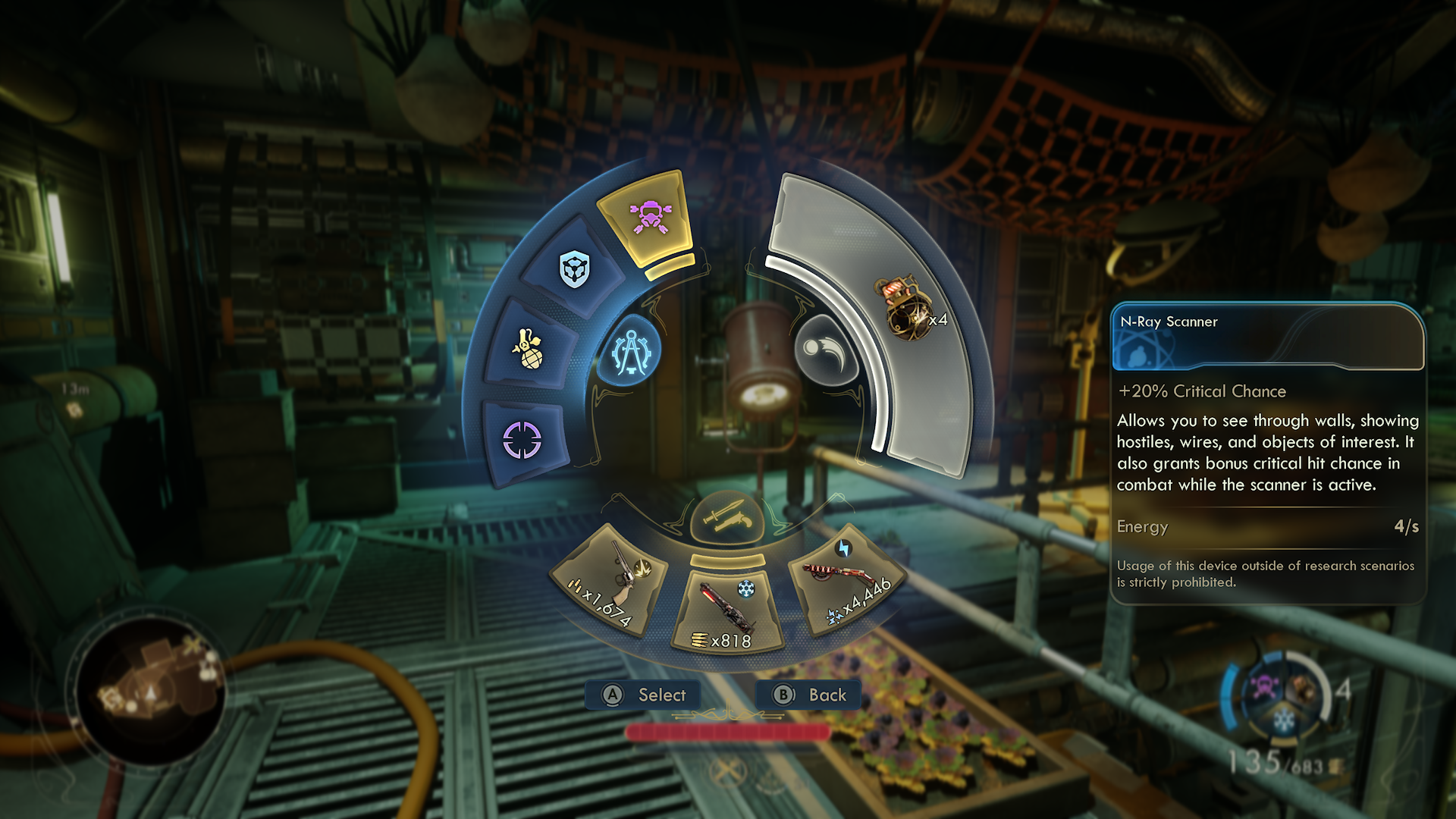
A core mechanic in The Outer Worlds 2 is its range of gadgets, each serving distinct tactical purposes. For example, players can use a scanner to detect enemies through walls or deploy an acidic dematerialiser to dissolve bodies into piles of goo. However, in practice, these tools proved far more useful for stealth-oriented builds, helping to locate targets and conceal evidence, while for more combat-focused playstyles their application felt limited and often more of an afterthought.
Conclusion – Game Rating
The Outer Worlds 2 stands as a strong successor in Obsidian’s RPG catalogue, successfully expanding on the foundation laid by the original. Its witty dialogue, meaningful choices, and satisfyingly brutal combat make it easy to get invested early on. However, many missions follow a familiar formula: travel to a location, collect an item, defeat an enemy, and report back. Although it is worth noting that creative dialogue options occasionally offer inventive ways to resolve encounters, adding variety to otherwise predictable objectives.
The level cap of 30 limits the ability to explore multiple build types, and while the skill system is rewarding, its caps and the somewhat repetitive level design leave room for improvement. Ultimately, The Outer Worlds 2 edges closer to the high standard set by Fallout New Vegas but settles comfortably as a great sequel rather than a groundbreaking one.
Employability Score
Outer Worlds 2 is reasonably kind to an employed player in how it handles sessions, but much less so in how much time it ultimately asks for.
You can save almost anywhere outside of combat and dialogue, which makes it easy to jump out of the game when real life interrupts, even mid‑quest. Session structure is less forgiving, where to feel like you’ve actually moved the story, you generally need something closer to a two‑hour block rather than a quick 45‑minute run, so it’s not an ideal “one mission after work” game.
Coming back after a break also isn’t seamless. The plot and characters don’t leave a particularly strong impression, so if you step away for a week or two, there’s a real risk of forgetting who is who and why you’re doing what you’re doing, and you’ll often spend time re‑orienting instead of progressing. On the upside, the controls are straightforward and very familiar if you’ve played other shooters or action‑RPGs, and the range of difficulty options means most players can tune the combat to their comfort level.
The bigger constraint is total runtime and pacing. You’re looking at roughly 25–40 hours to finish a standard playthrough and up to around 75 hours if you aim for completionist territory, yet the story doesn’t have the narrative punch or urgency that makes you want to rush to the credits. Taken together, it’s a game that fits into an employed schedule structurally, but doesn’t reward that time strongly enough to feel essential, resulting in a 0.7 employed ratio.
Bonus Points
However in instances where a game actually does innovate the genre rather than just adding another entry, it has to be rewarded. And with the flaw system being as strong as it is now, we have also elected to give it a bonus point.